Micro-Situations of Togetherness: Creating the Experience of Being Together
The project shifts the focus from migration as an economic issue to culture, hybrid identities, and a shared future
The project was developed within the framework of the retrospective exhibition To Make the World a Better Place, held at the Museum of Contemporary Art in Zagreb from 15 May to 12 October 2025, in collaboration with the Art Pavilion Zagreb.
A sharp increase in the number of foreign workers in Croatia in the last six years has changed the demographics of our towns and radicalised the political views aimed against migrants. At the other end, we find the global and local struggle for social equality which, in lieu of a division between the “locals” and the “foreigners,” relies on the togetherness of diverse and fluid identities and the cultural hybridity arising from it.

The question of how we build a shared future with our new fellow citizens – the foreign workers – is the starting point of this project.
Micro-Situations of Togetherness: Creating the Experience of Being Together is a mental process, a social relation and a physical space in a museum. Conceived for sharing the experience of socialising through learning, talks, debates, workshops, it brings together a temporary community of local and migrant population in the course of the exhibition.
The physical space has been created in collaboration with migrants from the Philippines and Indonesia, and represents their cultures, traditions, and everyday life in Croatia.


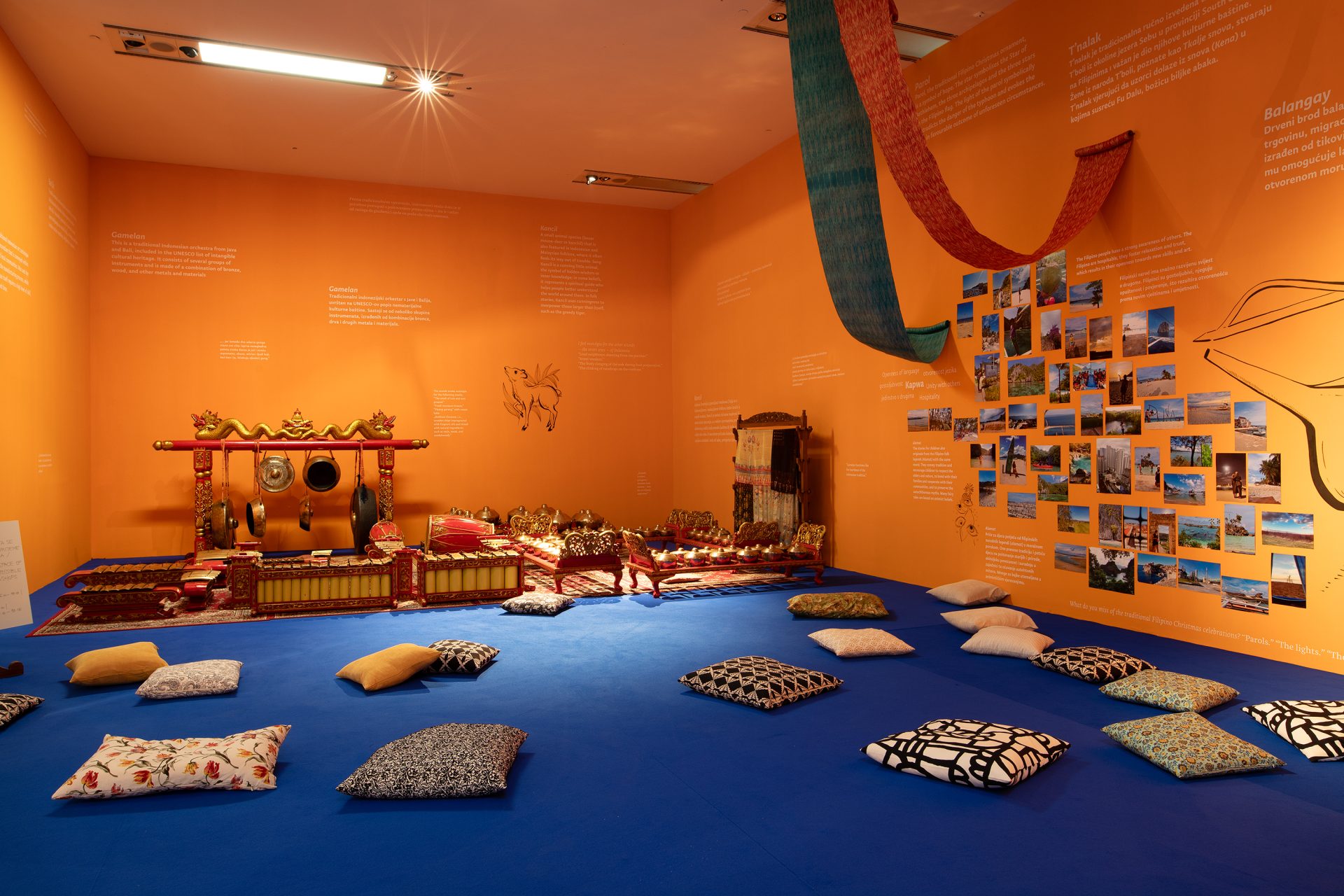

This is the space of their third place, a mental, political and cultural space that is hybrid, that marks neither here nor there, neither the country of arrival nor the country of origin, but is rather networked by the experiences of being in both, and speaks of the complexity of migrant identities but also of the domicile ones.
Throughout the exhibition, visitors participated in workshops dedicated to playing the Indonesian instrument gamelan, producing batik textiles and Filipino parol lanterns — traditional Christmas decorations — as well as in readings of Indonesian and Filipino fairy tales and discussions on shared coexistence.

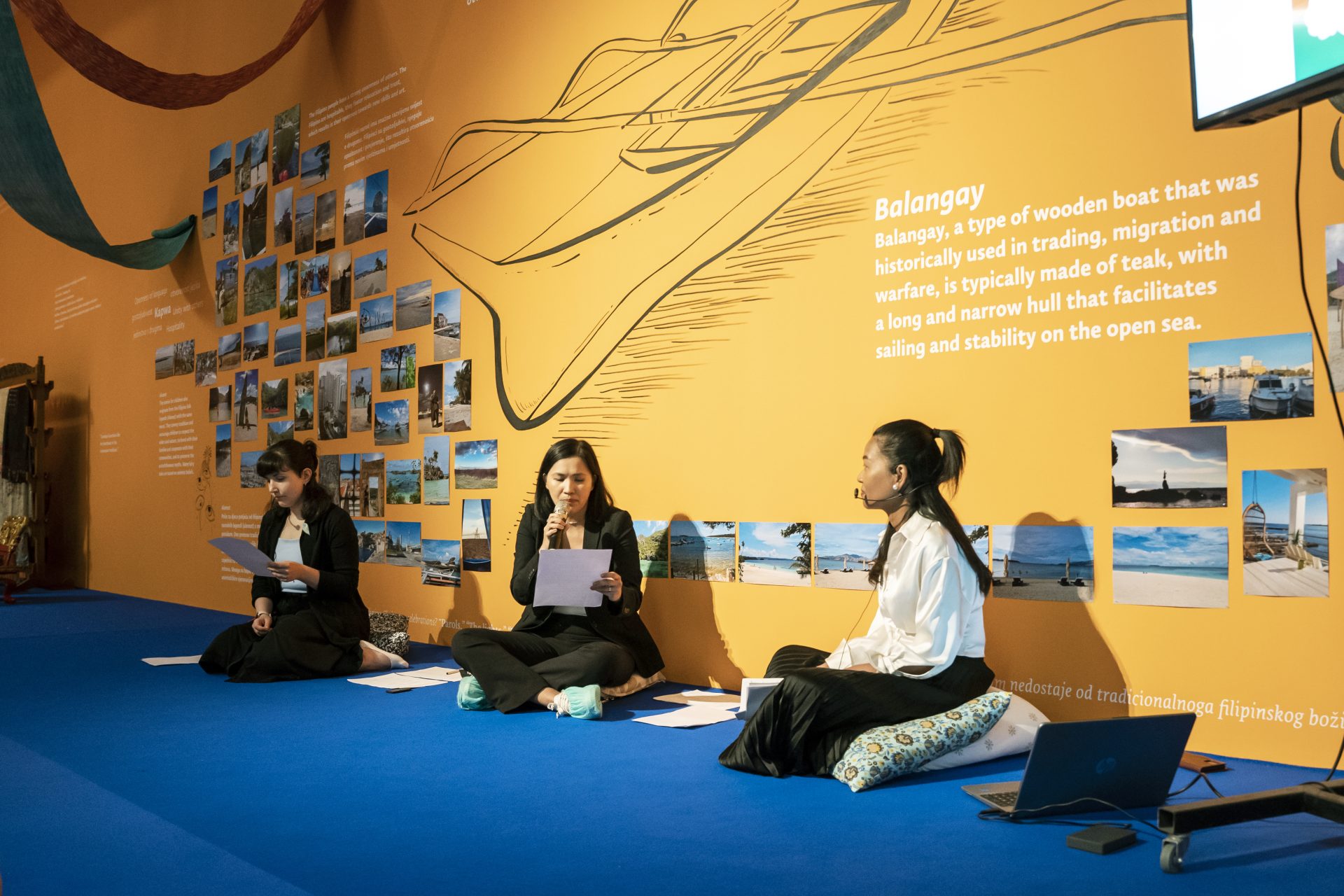

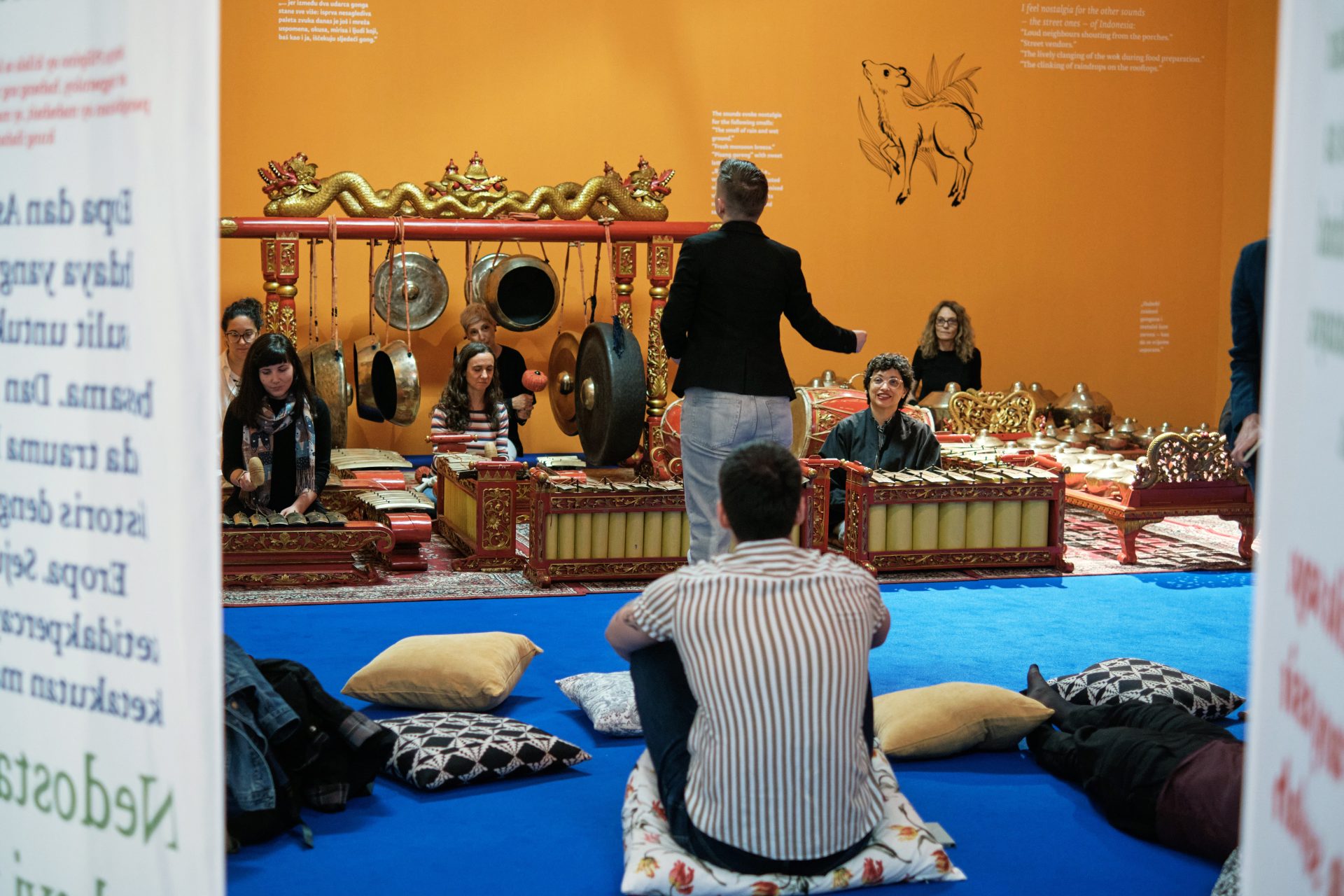
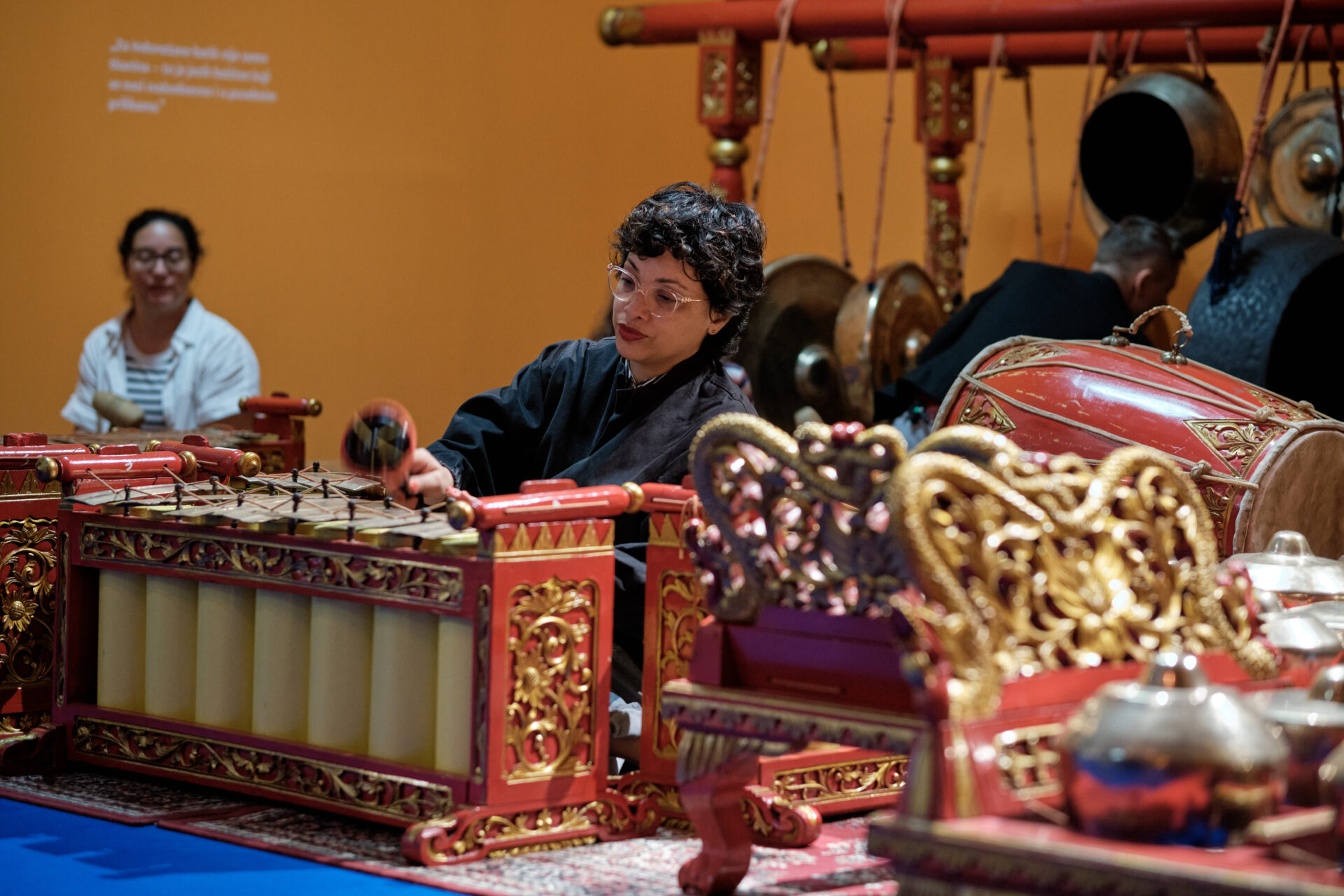

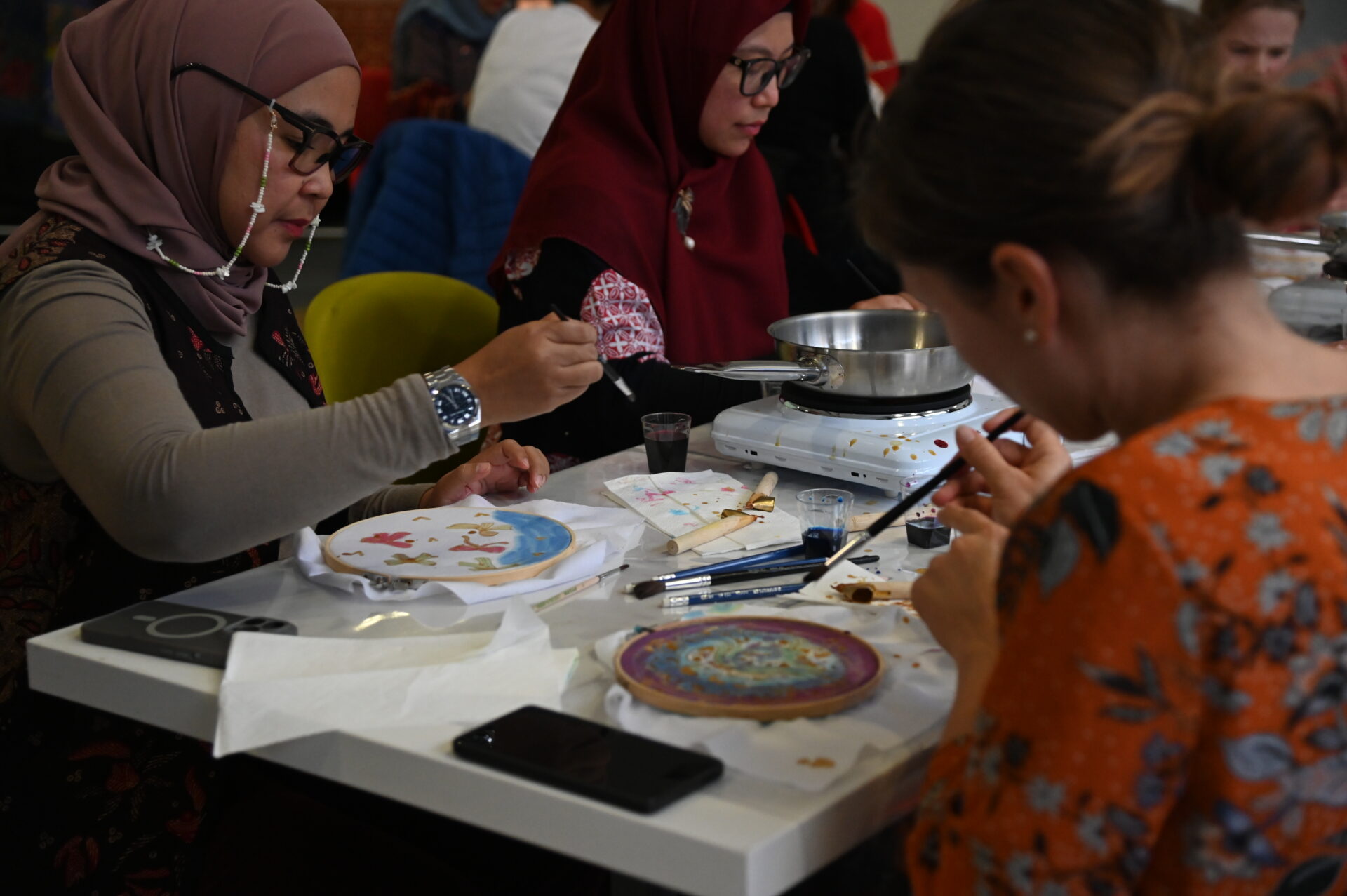
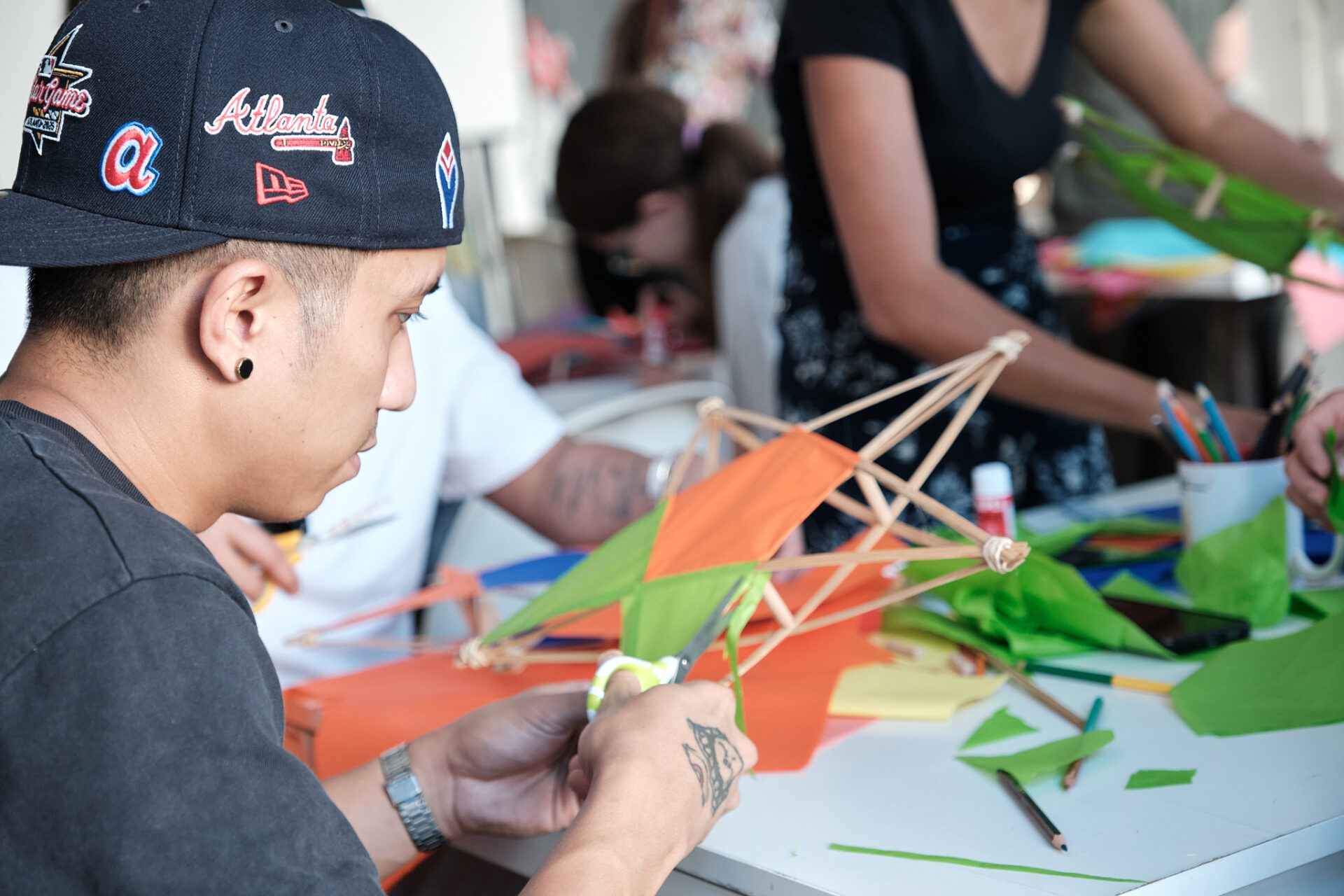
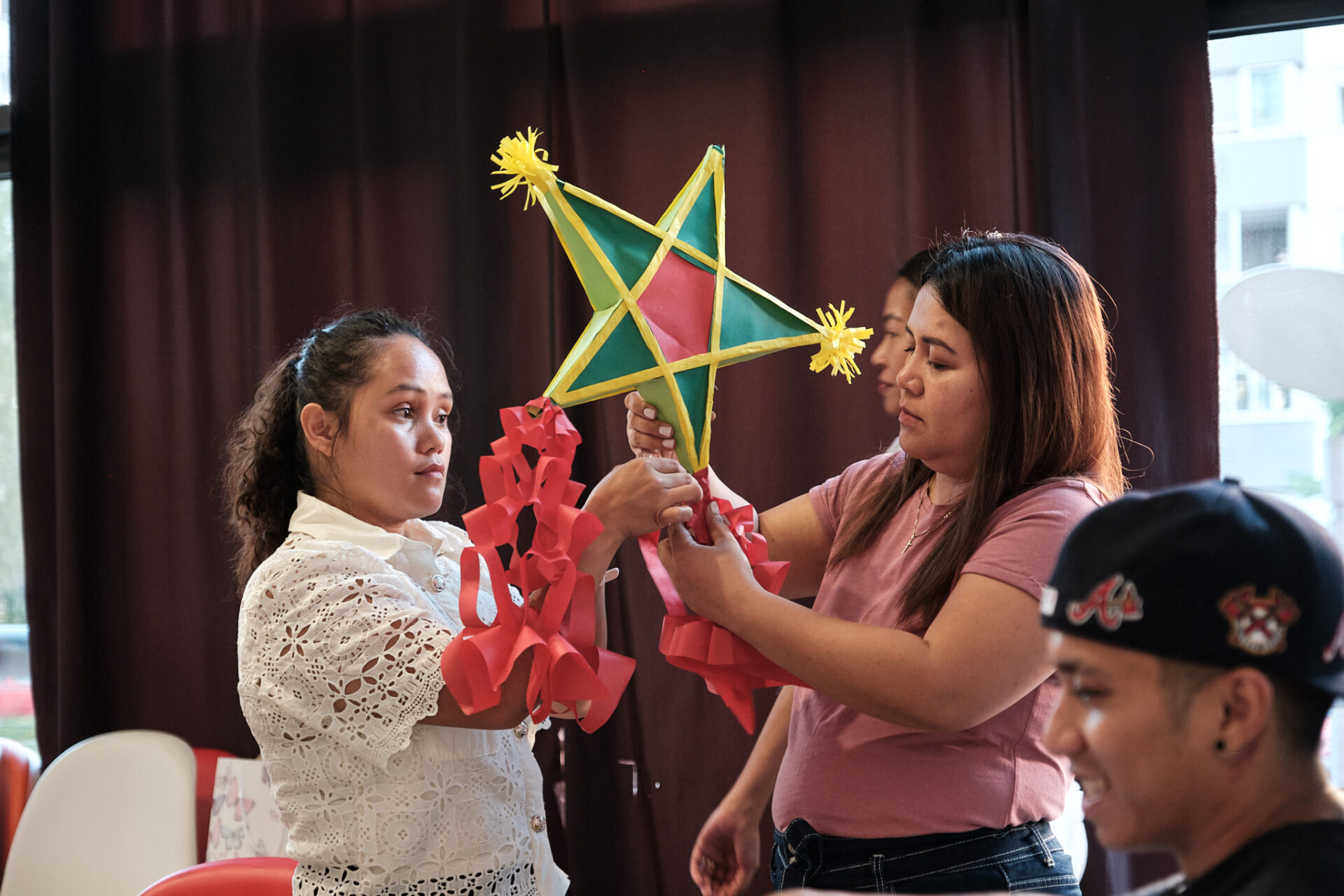
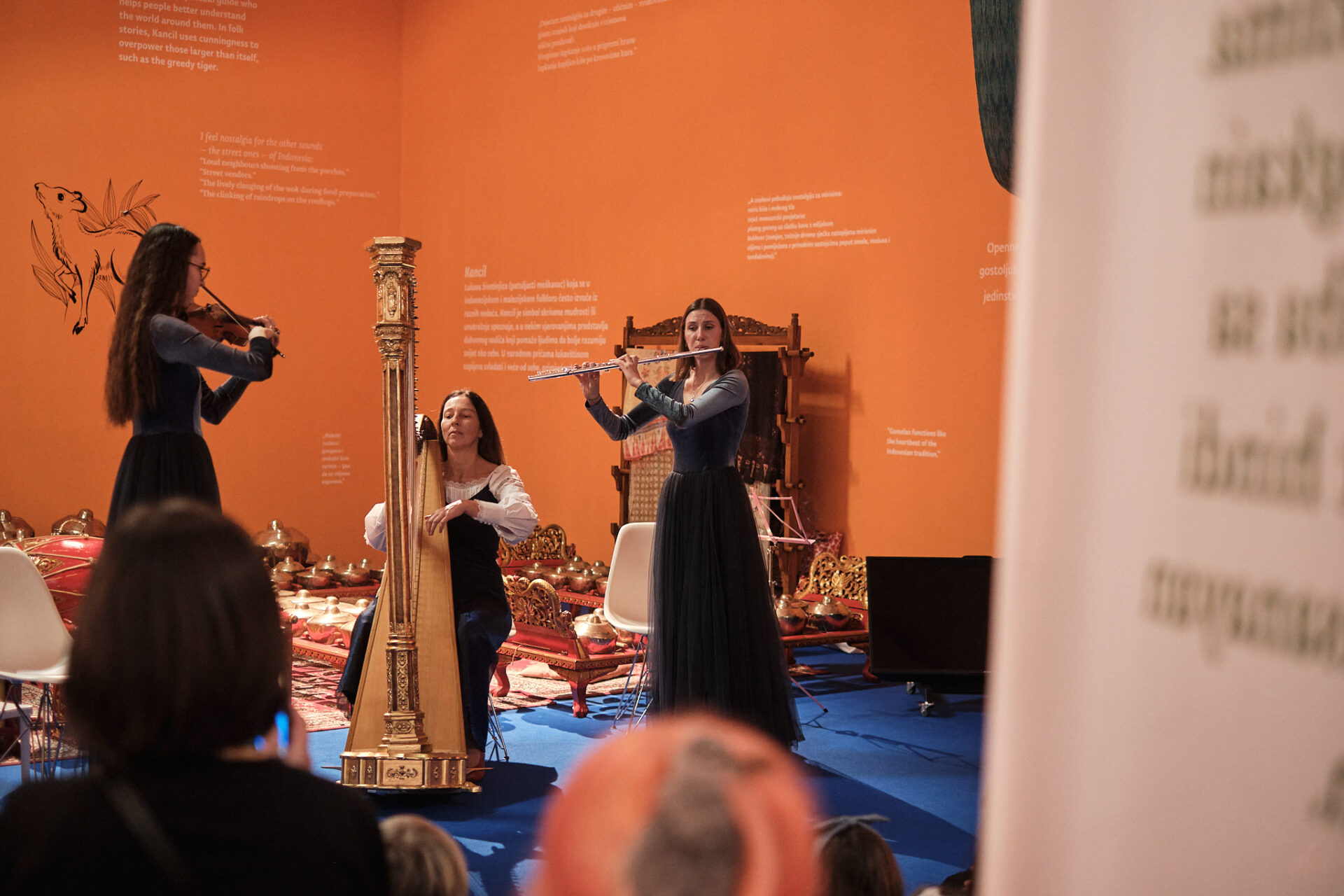
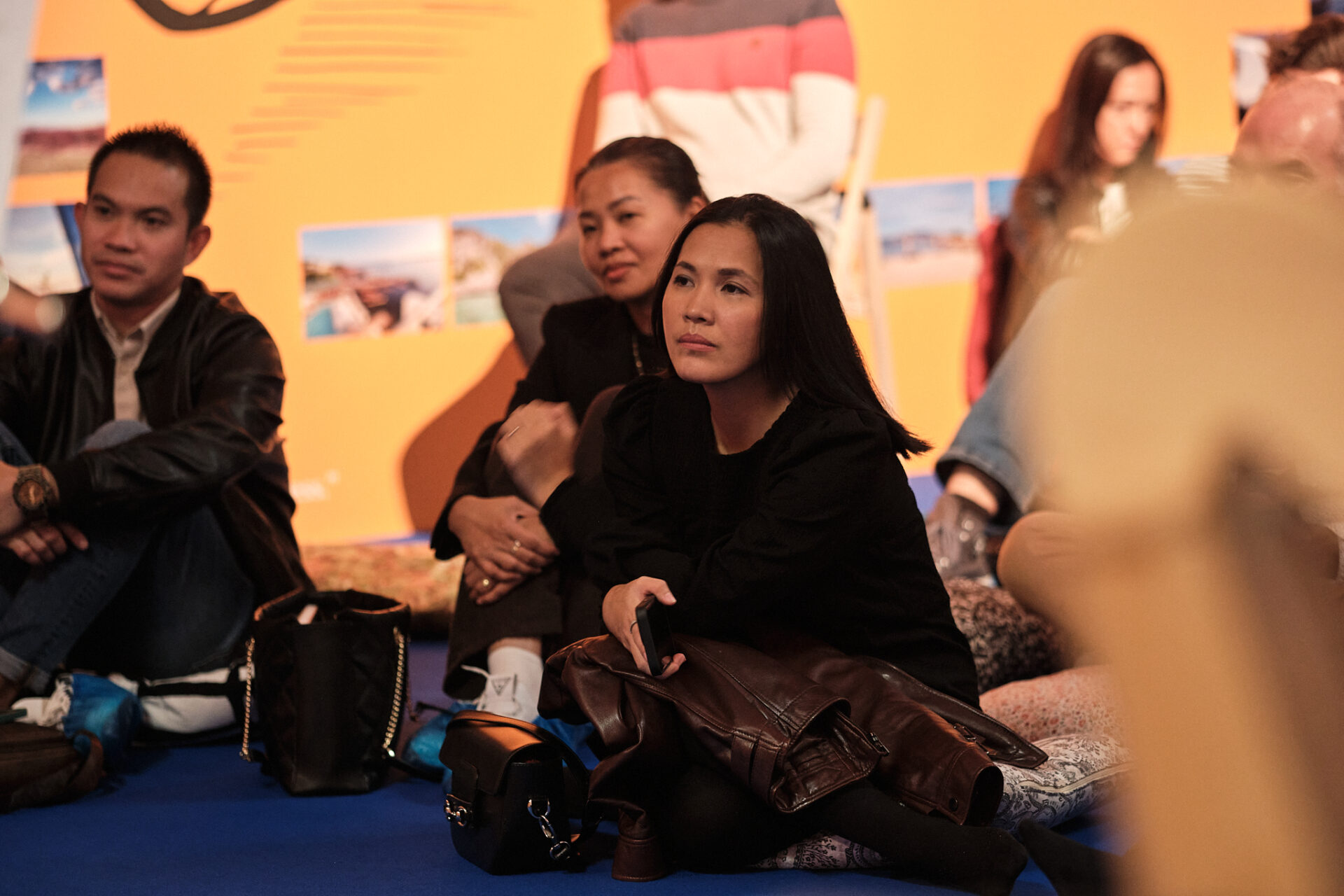
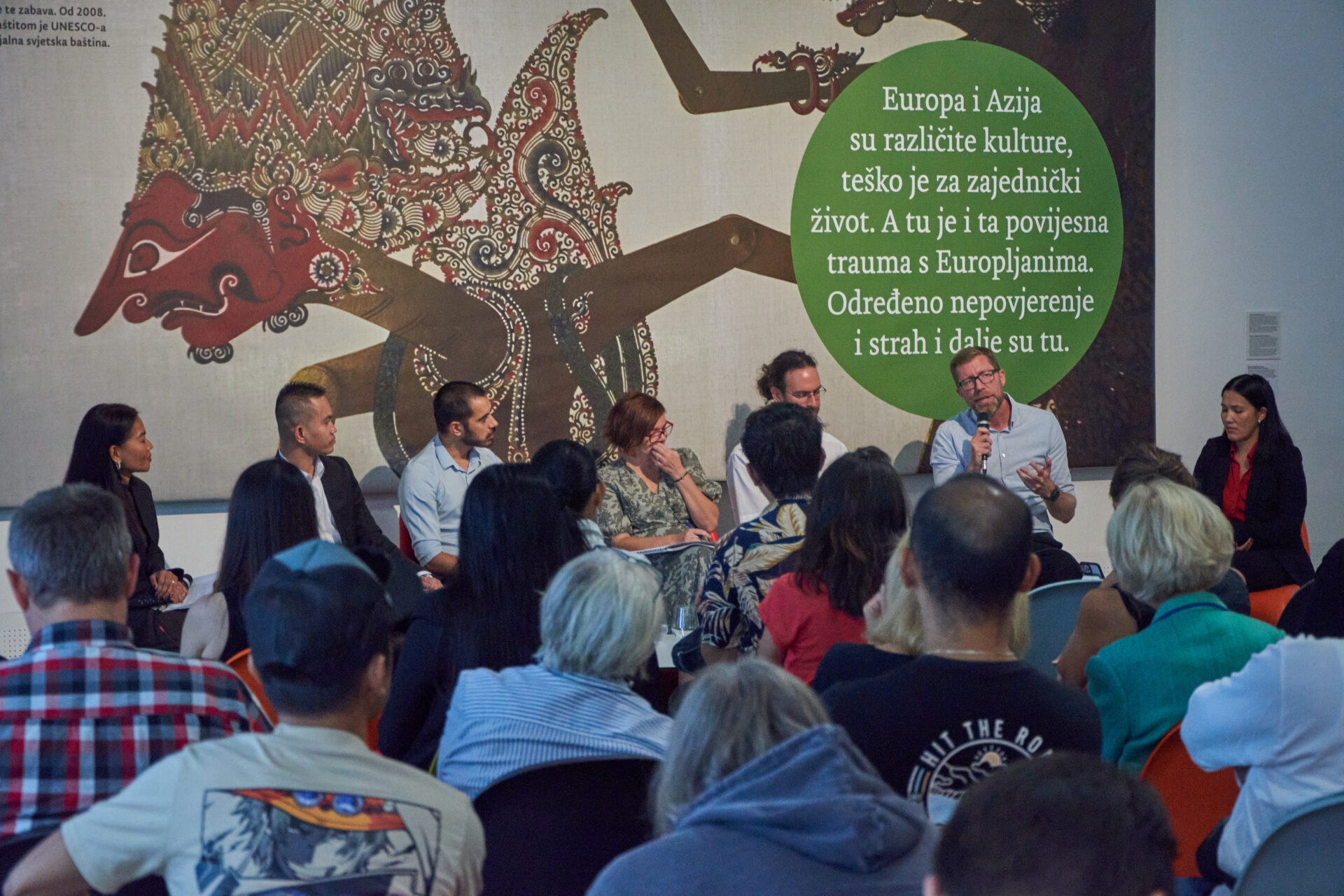
By taking over and combining the codes of the museum setup, social sculpture and everyday life, Andreja Kulunčić draws new attention to migrant workers, shifting the focus from the narrative of economic motivation and struggle for survival into the field of culture and art.
Project production:
Curator: Irena Bekić / Project coordinator: Ivana Završki /// Collaboration coordinators for the Embassy of the Republic of Indonesia in Zagreb: Derian Antonio Daniswara, Marina Pretković / Collaborator and collaboration coordinator for Indonesian culture: Marina Pretković / Collaborators for Indonesian culture: Wirdah Habsyi, Murni Nyaristi / Collaborator for the gamelan programme: Julija Novosel /// Collaboration coordinators for Filipino culture: Vida Kličko, Jerica Grgurić / Collaboration coordinator for the Embassy of the Republic of the Philippines in Vienna: Chryzl Sicat / Production of traditional Filipino parol lanterns: Ernesto David Quiwa /// Statements by Nepali workers: Dženana Kalamujić / Research on social distance towards foreign workers (incorporated into the project On the State of the Nation): Margareta Jelić / Texts in the exhibition space: Ivana Završki / Illustrations in the exhibition space: Lora Elezović / Translation: Mirta Jurilj, Marina Pretković / Proofreading: Dunja Aleraj Lončarić /// Installation and event photography during the exhibition: Ana Opalić, Vanja Babić, Sanja Bistričić Srića
Support: Embassy of the Republic of Indonesia in the Republic of Croatia, City of Zagreb Office for Culture and Civil Society (Intercultural Welcome Programmes) / Production: MAPA and the Art Pavilion in Zagreb, 2025.
The association MAPA is co-financed by public funds from the Kultura Nova Foundation.